


A memorable listing does not require a complete renovation. Thoughtful staging helps buyers understand a home’s layout, notice its best features, and picture how each room can function. These practical Connecticut staging fixes focus attention where it matters most: light, scale, condition, and a polished first impression.
Start With the First Five Minutes
Before a buyer studies a floor plan or compares square footage, they are forming an impression from the curb, entry, and first room they see. That is why the most effective staging plan begins with the path to the front door. Clear away seasonal clutter, sweep walkways, refresh a worn welcome mat, and make sure house numbers and exterior lighting are easy to see. Small maintenance details signal that the home has been cared for, while a tidy entrance lets the architecture and landscaping do the talking.

Inside, treat the entry as a transition rather than a storage zone. A slim console, one piece of art, or a simple mirror can add purpose without making the area feel crowded. If coats, shoes, mail, or pet supplies normally collect there, move them before photos and showings. Buyers should be able to step in, pause, and immediately take in the home rather than navigate around everyday belongings.
Lighting is another fast, high-impact fix. Replace burned-out bulbs, use matching bulb temperatures within each room, and open window coverings before photography. Connecticut homes often have appealing architectural details—molding, wood floors, built-ins, fireplaces, and distinctive window lines—that can disappear in dim images. Warm, consistent illumination makes rooms feel clearer and helps online viewers understand a space before they arrive.
A staging budget is often best spent on cleaning, lighting, touch-up paint, and decluttering before purchasing new décor. These basics improve nearly every listing photo and showing.
Do not overlook the details buyers may notice at close range: scuffed switch plates, loose cabinet pulls, streaked glass, dusty vents, and tired caulk around sinks or tubs. None of these items needs to become a major project, but together they can distract from a well-maintained home. Create a short repair list, complete the visible items first, and keep receipts or notes for any recent improvements that may be useful during the listing process.
Create Rooms With an Easy-to-Read Purpose
Buyers respond to rooms that feel intentional. A spare bedroom used for storage, a dining room that has become an office, or a finished lower level filled with miscellaneous furniture may be perfectly useful in daily life, but it can be difficult for a visitor to interpret quickly. Staging is not about erasing personality; it is about giving each room a clear visual job. Aim for an arrangement that shows circulation, usable floor area, and one or two standout features.
Start by removing excess furniture. Oversized sectionals, multiple side tables, exercise equipment, and stacks of bins can make an adequately sized room appear smaller than it is. Keep the pieces that establish function and comfort, then create open paths around them. In a living room, that might mean a sofa, an accent chair, a coffee table, and a lamp. In a bedroom, it may mean a neatly made bed, two small nightstands, and limited accessories.
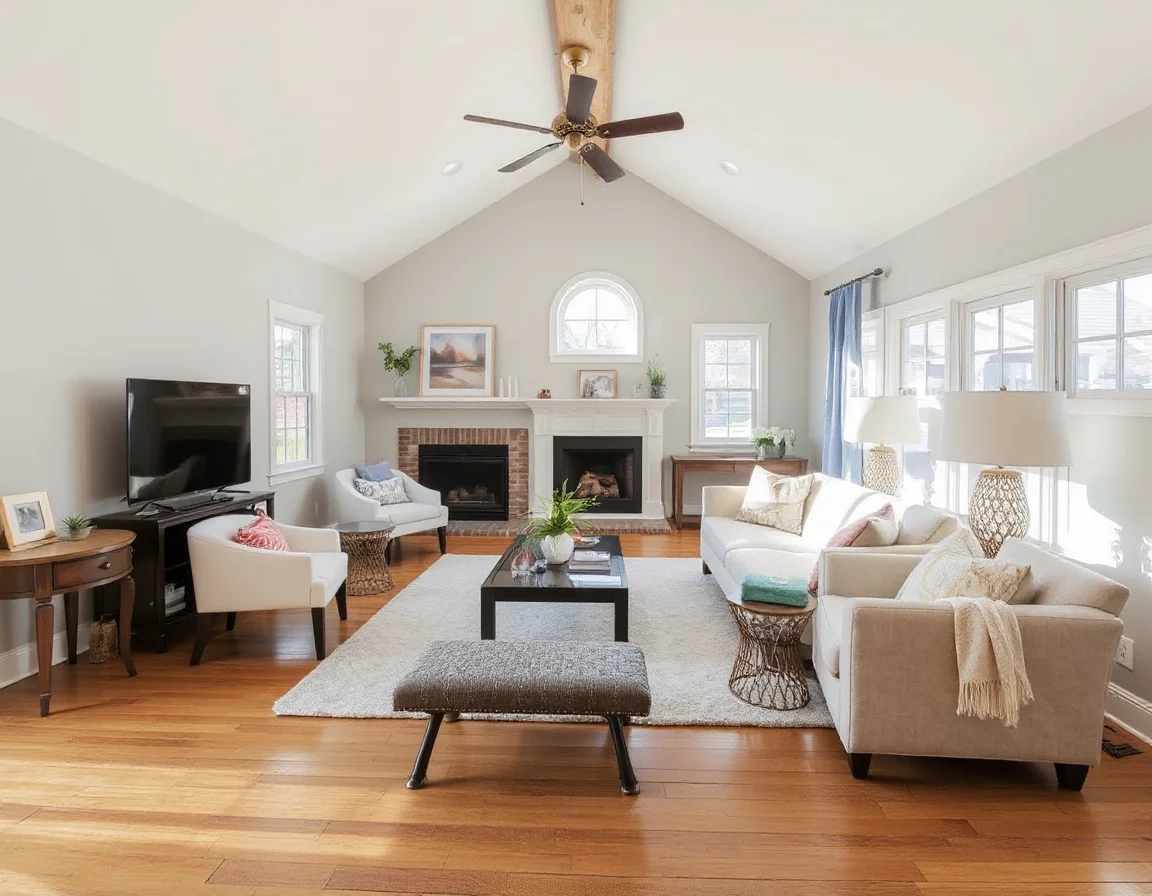
Neutral does not have to mean bland. A restrained palette of cream, charcoal, soft blue, natural wood, or muted green can photograph well while allowing a home’s finishes to stand out. Add texture through pillows, a throw, a simple area rug, or greenery, but avoid tiny decorative items scattered across every surface. A few larger pieces tend to read better in photographs than many small ones.
Kitchen staging deserves special attention because it is one of the most closely examined spaces in a listing. Clear counters nearly completely, leaving only a purposeful grouping such as a cutting board and a bowl of fruit. Remove refrigerator magnets, paper notices, dish racks, and small appliances that are not needed for the showing. Clean cabinet fronts, polish fixtures, and make the sink shine. These steps help buyers focus on counter space, cabinetry, storage, and layout.
Bathrooms benefit from the same edit. Fresh towels, a clean shower enclosure, closed toilet lids, and minimal counter items create a calm presentation. If the room needs a more substantial update, prioritize inexpensive fixes with a visible result: regrouting, replacing a dated light fixture, updating hardware, or repainting in a clean, widely appealing tone. The goal is not to disguise a home’s age; it is to show that each space has been thoughtfully prepared.
Make Photos and Showings Work Together
Most buyers first encounter a listing on a screen, so preparation for photography should be as careful as preparation for an in-person visit. Schedule photos after the cleaning, repairs, and staging are complete—not while projects are still underway. Walk through the home with a camera in mind and look for visual interruptions: cords, wastebaskets, personal paperwork, heavily patterned bedding, overflowing bookcases, and partially open closet doors.
On the day of photos or showings, open blinds and curtains where privacy permits, turn on interior lights, and check every room from the doorway. This is also the time to create a simple showing routine. Put away laundry, clear bathroom counters, empty trash, wipe down kitchen surfaces, and set the thermostat to a comfortable season-appropriate setting. The routine should be manageable enough to repeat whenever a showing is scheduled.
Storage is a common question during Connecticut home tours, and staging can help reveal it honestly. Closets, pantries, mudrooms, garages, and basement areas should be orderly rather than packed to the ceiling. Leave some open space on shelves and floors so buyers can assess capacity. If an area is crowded, consider off-site storage during the marketing period. This can make rooms easier to photograph and simplify the eventual move.
For occupied homes, protect privacy by removing documents, prescription medication, valuables, and personal photographs before marketing begins. The result is both practical and visually cleaner. It also allows visitors to focus on the property’s design and condition rather than the current owner’s daily life.
Choose Improvements That Support Your Listing Strategy
Not every pre-listing project offers the same return. Before committing to new flooring, cabinetry, landscaping, or major repairs, compare the likely cost with the current condition of nearby competing homes and the expectations of buyers in your price range. Sometimes professional cleaning, paint touch-ups, modern hardware, and better furnishings are enough to change the presentation dramatically. In other cases, an agent may recommend addressing a specific deferred-maintenance item before going live.
Keep a list of what has been completed, including dates for major systems, recent repairs, and improvements. That information can help shape marketing remarks and answer common questions during a showing. It is equally important to be accurate: staging can elevate presentation, but it should never imply that a feature or condition is different from what a buyer will find during inspection.
The strongest staging plan is selective. Improve what buyers will see immediately, clarify how rooms function, and let the home’s real condition guide decisions about larger updates.
A final pre-listing walkthrough with Karen Martin can help turn a long to-do list into a practical sequence of priorities. Focus first on visible condition, then on room function, then on the finishing touches that make photographs feel polished. When the home is clean, bright, and easy to understand, buyers can spend more time appreciating its features and less time trying to look past distractions.
Staging is ultimately a form of preparation: it gives your listing the best opportunity to make a clear, confident first impression. With a few strategic fixes and a consistent showing routine, Connecticut sellers can present their property with care, highlight the spaces that matter most, and move into the market with a stronger plan.