

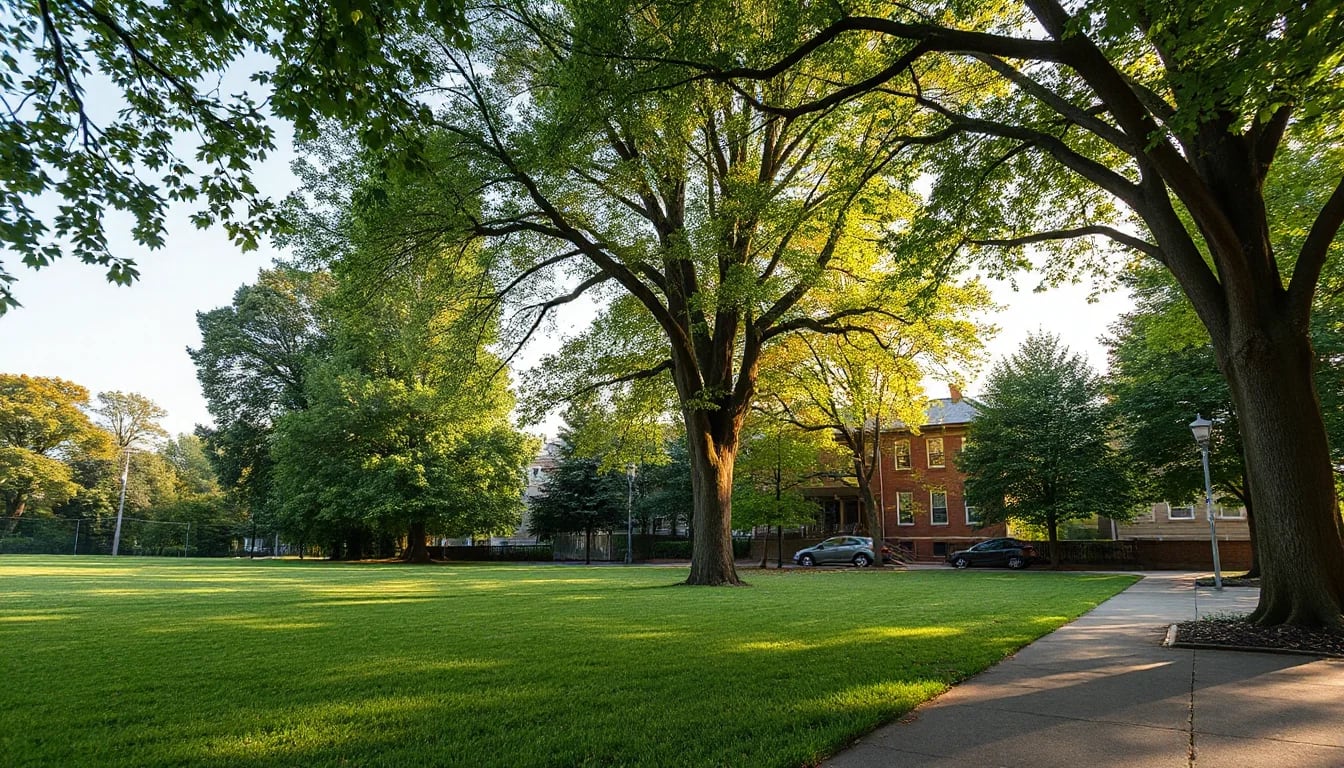
Beacon Hill rewards a slower look. Its Federal-era facades, brick sidewalks, public gardens, and direct transit connections create a distinctly Boston setting where daily errands, cultural destinations, and riverfront paths can all be part of the same walk. For anyone comparing homes in central Boston, understanding the neighborhood’s historic streetscape and practical rhythms is as important as looking at square footage.
A Historic Streetscape With Everyday Detail
Beacon Hill is one of Boston’s most recognizable historic districts, set just north of Boston Common and west of Government Center. The neighborhood is known for narrow brick lanes, gas lanterns, iron railings, window boxes, and rows of carefully maintained townhouses. Its visual character comes from a long architectural history rather than a single style: Federal and Greek Revival influences are especially visible, while later alterations and apartment conversions add layers to the streetscape.
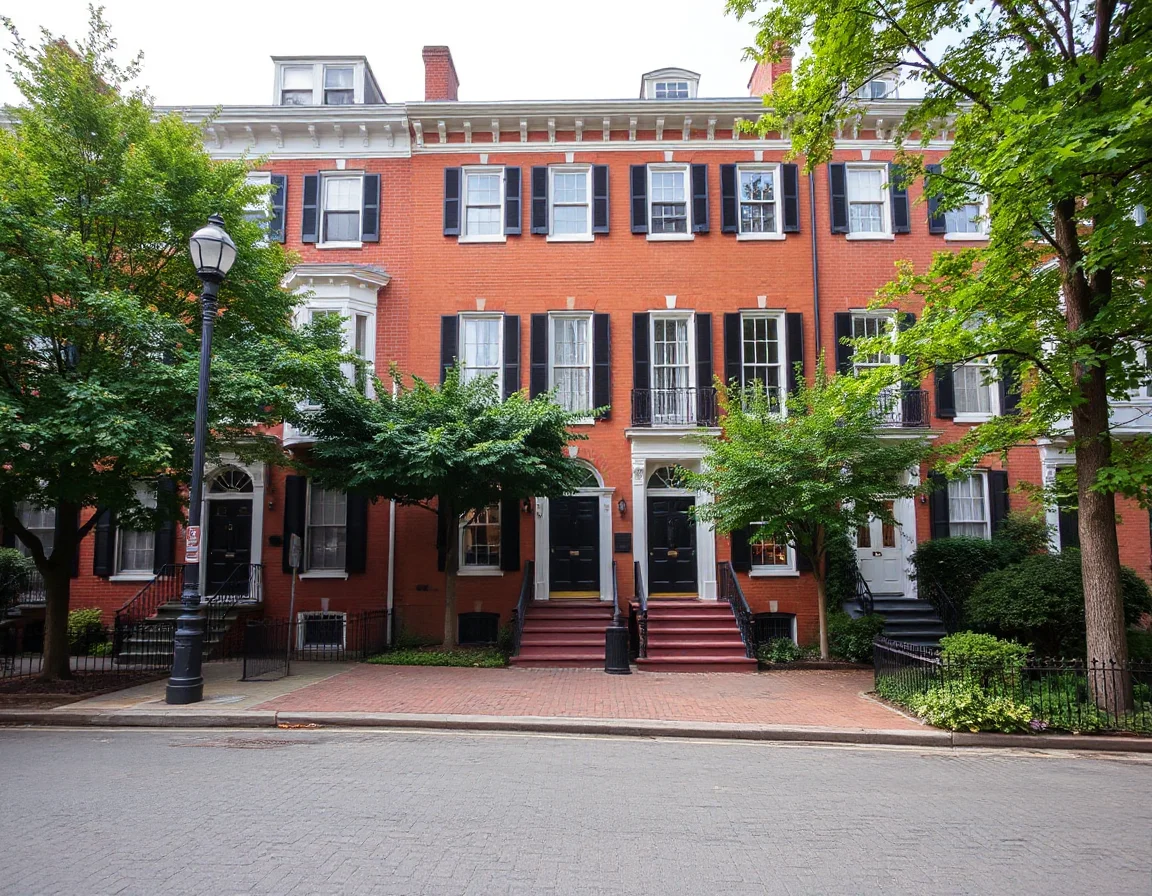
Acorn Street often receives the most attention, and its cobblestones are a memorable detail, but the appeal extends well beyond one photographed block. Charles Street forms a practical commercial spine, while streets such as Mount Vernon, Chestnut, Pinckney, and Brimmer reveal different scales of architecture, garden walls, and views toward the Charles River. Because many streets are compact and irregular, a few blocks can feel remarkably different from one another.
That texture also matters when evaluating a property. Historic homes may offer original millwork, fireplaces, high ceilings, deep window openings, and period masonry, but they can also have unusual room dimensions, stair configurations, shared walls, or preservation considerations. Buyers benefit from reviewing the layout in person, asking about recent systems updates, and understanding which exterior changes may require approval in a historic district.
In Beacon Hill, the block can be as meaningful as the address: street width, natural light, nearby transit access, and the condition of original details can shape both daily use and long-term maintenance planning.
For visitors and residents alike, the neighborhood’s design encourages observation. A short walk may pass a hidden courtyard, a brass door knocker, a small public garden, or a broad set of steps leading toward the State House. The district feels composed rather than uniform, which is part of why tours, showings, and repeat walks are especially valuable here.
Landmarks That Anchor the Neighborhood
Beacon Hill sits beside several of Boston’s most important public spaces and civic landmarks. The Massachusetts State House, with its prominent gilded dome, overlooks Boston Common from the edge of the neighborhood. The Common and the adjacent Public Garden provide open green space, seasonal color, and pathways that connect Beacon Hill to Back Bay and the theater district without requiring a car.
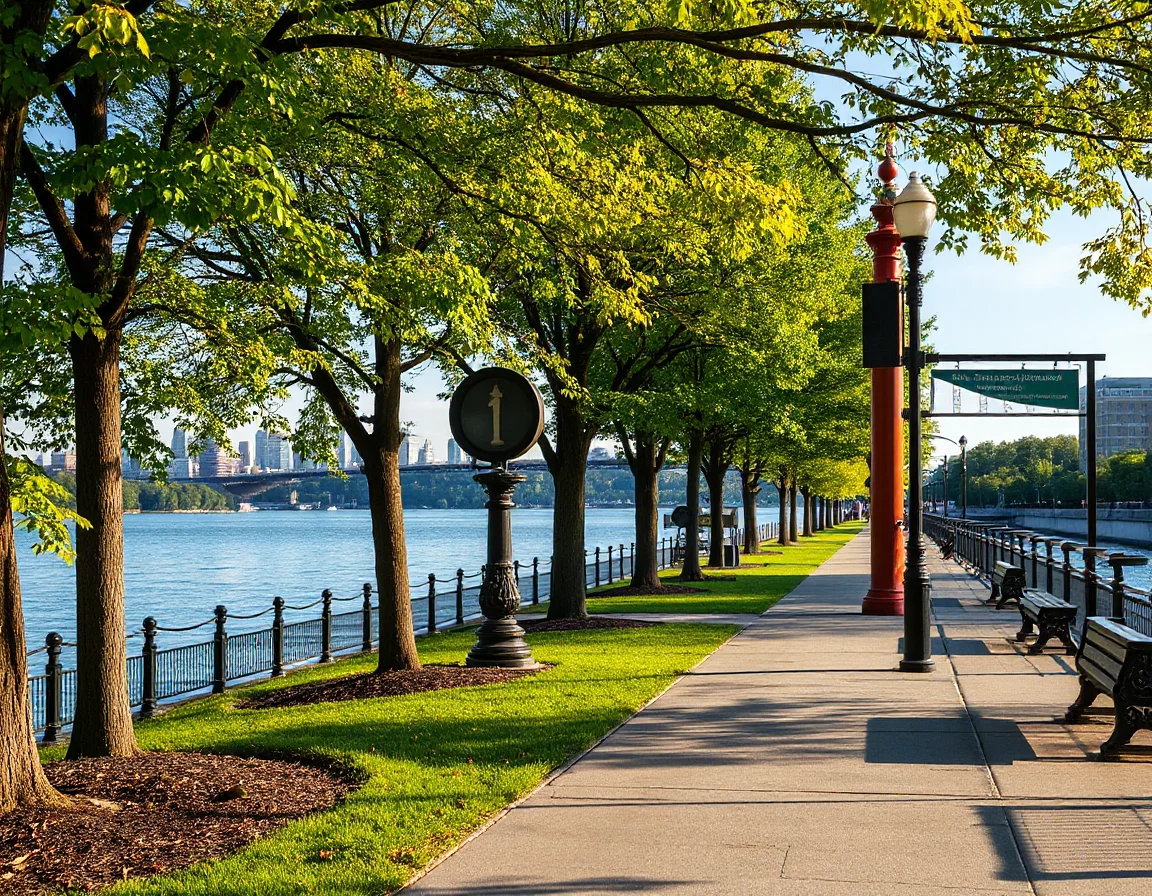
On the northern side, the Charles River Esplanade offers a contrasting landscape of water, lawns, paths, docks, and mature shade trees. It is a useful place for walking, running, cycling, or simply pausing near the river. Seasonal events and changing river views make it one of the area’s most enduring public amenities, while the Storrow Drive crossing points connect the hill to the waterfront edge.
Other nearby destinations add to the area’s cultural map. The Museum of African American History on Beacon Hill documents the neighborhood’s central role in Boston’s Black history and the abolitionist movement. The Nichols House Museum offers a preserved look at domestic life in a Beacon Hill townhouse, while the Harrison Gray Otis House and nearby historic sites help illustrate the architectural and civic development of early Boston.
These places are not merely sightseeing stops. They give the neighborhood a sense of continuity and provide useful orientation points when learning the area. A route that begins near the State House can continue through the Common, along Charles Street, and down toward the Esplanade, offering a compact introduction to the mix of civic, residential, and recreational spaces surrounding Beacon Hill.
A walking route from the State House to the Esplanade can connect historic architecture, public green space, river paths, and Charles Street in less than a mile.
Charles Street itself contributes a more day-to-day rhythm, with services, specialty food options, casual gathering spots, and independent businesses woven into the historic setting. The street’s scale is pedestrian-oriented, and its central location makes it a natural point for errands before heading toward the Common or river. As with many older urban neighborhoods, sidewalks, curb access, and parking patterns vary considerably by block, so it is worth visiting at different times of day.
Transit, Walking Routes, and Central Boston Access
One of Beacon Hill’s defining practical advantages is its location near several MBTA stations and central employment, civic, and cultural destinations. The Red Line at Charles/MGH provides a direct connection toward Cambridge and South Station, while Park Street and Government Center offer additional subway options within walking distance. Bowdoin Station is also nearby on the Blue Line, depending on the starting point in the neighborhood.
For a person who prefers to combine transit with walking, Beacon Hill offers many logical routes. Massachusetts General Hospital and the Charles/MGH station sit along the neighborhood’s western edge. Downtown Crossing, Faneuil Hall, the Financial District, and North Station are reachable by a longer walk or a short transit connection. The exact experience will depend on the property’s location, the route’s hills and stairs, and current MBTA service conditions.
Car ownership is possible, but it is usually a decision that deserves careful attention. Off-street parking is limited and can be a major component of a property’s value or carrying cost. Street parking rules, resident permits, garage arrangements, snow emergencies, and loading access are all practical details to investigate early. For some buyers, proximity to transit and walkable services may reduce the need for a vehicle; for others, dedicated parking may be a top priority.
A thoughtful showing plan can make these tradeoffs easier to assess. Walk from the property to the nearest station, test the route to a preferred green space, notice the condition of sidewalks and street lighting, and ask how deliveries, guest parking, trash collection, and building access are handled. These small operational questions often clarify whether a home fits a buyer’s preferred routine.
What to Consider When Exploring Beacon Hill Homes
The Beacon Hill housing market includes attached townhouses, condominium residences, co-ops, rental buildings, and homes that have been thoughtfully updated within historic envelopes. Inventory can range from compact pied-à-terre-style spaces to multi-level residences with private outdoor areas or roof access. Original architectural details may be a major draw, while renovations can introduce modern kitchens, improved heating and cooling, upgraded windows, and revised floor plans.
When comparing properties, look beyond the finish level. Ask about monthly fees where applicable, reserve funding, building rules, insurance, heating systems, exterior maintenance, roof age, and any planned capital work. In a historic setting, preservation-minded stewardship can be part of ownership, particularly for exterior elements visible from the street. A thorough inspection and a clear understanding of association documents can help turn a beautiful first impression into a well-informed decision.
It is also useful to visit during more than one season. Spring highlights the Common and Public Garden, summer brings activity to the Esplanade, autumn emphasizes the brick-and-foliage palette, and winter can reveal how light, wind, snow removal, and street access affect a particular block. Every season shows a different side of the neighborhood’s architecture and infrastructure.
Beacon Hill’s lasting appeal lies in this blend of beauty and function: historic homes beside public institutions, river paths near transit, and small-scale streets within reach of the wider city. Whether your interest is an original mantel, a renovated condominium, a nearby station, or a favorite walking route, taking time to explore the details will provide the clearest picture of what living in this historic Boston neighborhood can offer.